How Do You Know if Shot in Slog
A Guide To Our Southward-Log Workflow
+ The Custom S-Log LUTS nosotros've been using
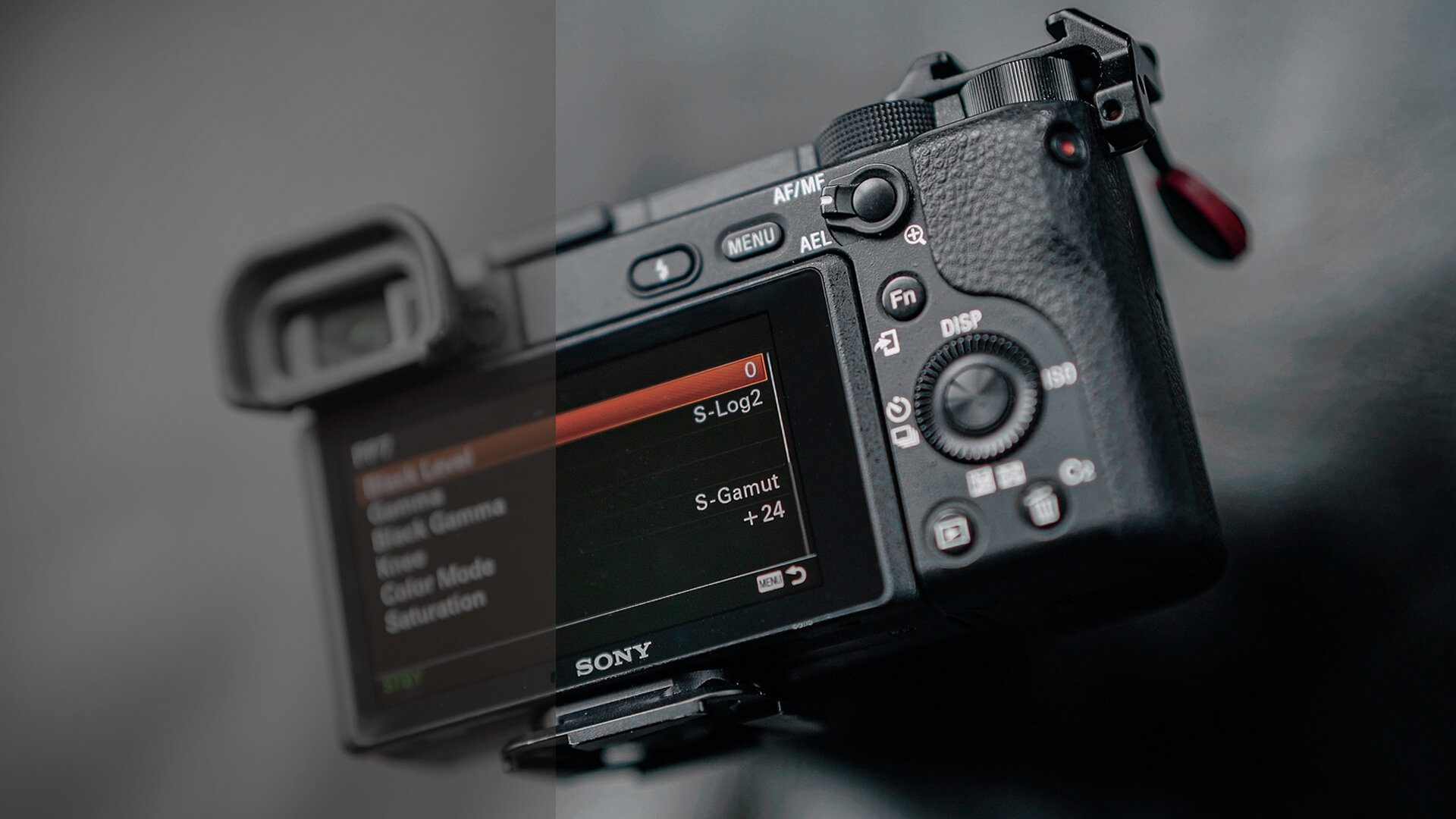
Over the terminal year nosotros've been getting a lot of questions near our color grading workflow, specifically how we bargain with S-log2 and S-log3 footage. We've been shooting Due south-Log since 2022 and 1 of the questions we ofttimes get asked is:
"How do y'all edit your Sony South-Log footage?"
Well, we're taking you through our S-log2 and S-Log3 workflows including our camera settings, shooting tips, LUTs we use, and setting up your files in mail.
Lookout the Video
Read The Post
What is Log?
Without getting too technical, log footage refers to the mode the photographic camera records the scene in order to capture as much dynamic rage as possible, which is desirable because wide dynamic range is 1 of the many subtle visual cues we've associated with looking cinematic. Unedited log footage volition therefore be really low in contrast and saturation in order to preserve that wide a range of data.

A7S3 | S-log3 out of camera
Then in post, nosotros can add dorsum in contrast and saturation. This aligning should be standardized and anticipated - information technology should be a simple like shooting fish in a barrel step to go your log footage looking more than "normal" so you can so start grading or stylizing your image.

A7S3 | BC S-log3 for Sony A7S3 LUT applied
And this is where LUTs or "look upward tables" come in to play. They're basically a standard set of instructions or filter if yous will, that tin can accept intendance of this conversion within your editing software. And this is where at that place's a lot of defoliation:
How practice I get these LUTs?
Practice I make them? Do I buy them?
Which one should I use?
In 2022 when we started shooting log on our A7S2, we had all those same questions and ultimately ended up developing our own, and we've since developed a couple more. Lesser line is, any footage y'all encounter on our YouTube aqueduct was shot in Due south-Log and was run through ane of our custom LUTs.
South-log2 or South-log3?
What LUT you utilise depends on what camera and settings yous're using. In the Sony mural, they give you two log options: S-Log2 and S-Log3. Generally speaking, S-Log2 is better suited for most of their consumer 8 bit cameras such equally the a6000 series, a73, a7r4, etc.
If you're using a camera that tin record in 10 bits or has a college dynamic range, such at the new A7S3, S-Log3 is a better choice. If you desire more info on this, style nerdier people have done videos on it, aka Gerald Undone.
And so we have cameras that fall in both of those categories, so we take developed LUTs for both Southward-Log2 and S-Log3.
S-log two using 8 scrap consumer cameras
If yous're using any Sony consumer camera that isn't the A7S3, so you should probably choose S-Log2 which will work with ane of our two South-Log2 LUTs.
Set up-Upwards
Alter your picture profile.
01
Go into your menus, notice the picture profile section and choose PP7. This should automatically set the gamma to S-Log2, the color way to S-Gamut, and saturation to 0. The only matter nosotros choose to change in the profile is the detail level from the default -7 to 0. A lot of people would rather add together sharpening back in post, but I notice leaving it at 0 looks fine and quite bluntly does a better job than I can practice in post. Either manner, this has zip to do with shooting in log, but information technology's a setting you should exist aware of.
02
I other setting we use is the gamma assist part. We exit this on auto which will basically normalize how the footage looks on the back of your camera but will not affect the log footage existence recorded. This volition help you lot gauge the exposure and lighting of your shot which tin exist kinda hard to do with a actually depression contrast log image.
03
I besides set my zebras to the clip point of whatever profile you're using and so 106 for S-Log2. That will tell me what is definitely clipped, just I don't judge my exposure past the zebras I more then just use the meter and eyeball it. I also stopped relying on my histogram, which was hard because as a lensman, that was my aureate standard, but I find in log modes, your image can be very over exposed just the histogram can be deceivingly key making you think you have a properly exposed image.
If you shoot with these settings, our free Original Due south-log2 utility LUT will work for you.
Exposure
Once your camera is setup, you lot need to consider how to expose your image. There'southward a lot of people who have done deep dives into why but generally you should try to expose your image about ii stops OVER what your meter is telling you. This is to go on your shadows clean and as noise free as possible. If you lot want to get fancy, you lot tin can get an eighteen% grey bill of fare and spot meter it and conform the exposure that way just I discover the photographic camera'south "multi metering way" actually does a pretty adept chore assessing most scenes. Besides, you lot get pretty good at knowing what looks correct after you shoot log for a while. But call up that +ii.0 is the highest the meter will read so if you're really at +v, ti volition just blink +ii.0 which can exist confusing and then aiming for 1.seven is usually a safer bet and of class it if you're plus 1.3 vs plus 2.0, it's not going to be make that much of a difference.
Editing
We use Adobe Premiere Pro to edit but almost software should accept a way to utilise a LUT file. In Premiere I usually will create two aligning layers, one for my log to rec. 709 LUT and any primary color correction and and then a 2d aligning layer for my grade, which can be applied to unremarkably the whole edit. Using Lumetri colour console, I'll utilize our Original South-Log2 LUT in the creative tab rather than the basic corrections department. And that's considering any adjustments I make in the basic corrections panel to a higher place it volition happen Before the LUT is applied. Then if I accept a super high dynamic range scene and the LUT completely obliterates the shadows or highlights, I can make adjustments in the basic panel that can save this information. One time you lot have your LUT applied, you can practice your master color correction by fine tuning your exposure and white balance and really get the clip to a neutral starting point for your color course
viii bit south-log2 color noise fix
One of the major issues with shooting with consumer 8 fleck cameras and using log footage is that there are side effects when making massive color adjustments in post, and what i mean past that is information technology tin bring out artifacts. With Sony in particular, blocky dark-green and magenta color dissonance in the shadows can be a big issue. Only we accept a fix for this, and hats off to Dunna Did It for this thought.
So we mentioned earlier that log footage records images with depression dissimilarity and low saturation and that you add together both back in in post. Since the goal of shooting in log is to maximize dynamic range, about of the benefit comes from the dissimilarity, not the color. If we can tape the color saturation equally close to normal every bit possible and practise a less ambitious color aligning in mail, that should set the problem.
I did a bunch of tests and figured out what I idea the best settings were in camera so adult a new custom LUT, and I tin go an image that is most identical to our original S-log2 LUT only without the color blocking.
if yous're interested in this LUT, You can purchase it below

Set-Up
01
To use it, you'll first need to gear up your camera upward. Once more, we're using the a6400 hither as an instance only nearly other Sony cameras will have similar if not identical menus. Notice the picture profile menu and choose PP7. This should by default have the gamma gear up to S-Log2, the color style to S-Gamut, and saturation to 0. Modify the saturation to +24. I tested a bunch of different saturation levels and found +24 to require the to the lowest degree ambitious adjustments in post, hence why I chose it. And as mentioned before, we also change the detail level from -7 to 0 every bit nosotros find the in camera sharpening does a decent job and saves us from having to acuminate in post.
02
We as well recommend setting the gamma assist role to auto which will attempt to normalize how the preview looks on the back of your camera without affecting the contrast of the log footage beingness recorded. Notation that the colors will look hyper saturated on the back of your camera since we jacked the saturation in the film contour.
Exposure
As we explained in a bit more detail in the video at the beginning of this post, you'll want to aim for exposing 2 stops over what your meter is telling you. Nosotros utilize the default "multi metering fashion" and detect it does a pretty good chore in almost cases. I custom ready zebras to lower limit 106 so I know what's clipped, merely I don't utilise them to gauge my exposure.
Editing
I'll refer you guys again to the video on how we ready our timeline but in a nut shell we create one adjustment layer for primary color correction, use the LUT in the artistic tab, and employ a second aligning layer above it for grading/stylizing.
southward-log 3 cameras - a7s3
If you're using a camera similar the new Sony A7S3 that's improve suited for S-Log3, nosotros've adult our custom S-log3 for A7S3 LUT. Nosotros created this to match our other Sony cameras shooting S-Log2 then regardless of which camera we are using and whether it's shooting in S-Log 2 or three with or without the saturation fix, all of our angles will lucifer every bit seamlessly equally possible.
Gear up-Upwardly
01
The offset thing you'll need to practice is setup your camera. Find the picture profile menu and choose PP9. Make sure the gamma is ready to Southward-Log3, the colour manner is set to S-gamut3, and the saturation is set to 0. As we said in the last two sections, nosotros prefer to set the detail to 0 instead of -7 every bit the camera does a decent chore sharpening in our opinion, but this is of course upwards to personal preference.
02
Nosotros besides make sure gamma assist is set set to auto and custom set up our zerbas to lower limit 94 to show us areas that are blown out.
EXposure
Equally with Due south-Log2, you'll desire to overexpose what your meter is reading, more often than not between ane and two stops. Gerald Undone did a massive video which covers this so I'll spare you guys the details, link is here.
Editing
In post, you'll and then of course use our S-log3 for A7S3 LUT and employ it in whatever editor you use, in our case, Adobe Premiere Pro. Again, we talk about how we gear up up our timeline and adjustment layers in the video, but basically it'due south employ the LUT via the creative tab on the start aligning layer, primary color correction can then be done in the basic correction tab of the aforementioned adjustment layer so it applies corrections BEFORE the LUT and and so a second adjustment layer on superlative of the outset can be used for your grade.
So that is it
With our custom utility LUTs we tin can get reliable log to Rec. 709 conversions and matching angles regardless of the photographic camera we're using or if information technology's S-Log2 vs S-Log3. These are all the cameras nosotros regularly utilize and you can see they all lucifer pretty well.

Top left: Sony A7R4 (Due south-log2 SAT +24), bottom left: Sony A7S2 (S-log2 SAT 0), top right: Sony A6400 (S-log2 SAT 0), lesser right: Sony A7S3 (S-log3). All images hither have very slight white balance adjustments + the last colour class added.
Each differs a little on the magenta/dark-green axis but with a tiny white balance adjustment in post they're basically indistinguishable. I know a lot of you have been request about our process and so there information technology is. You can detect all of these LUTs in the shop, including our costless Original Southward-log2 LUT that we've legit been using in most of our videos since 2016.
SHOP Utility LUTS
https://world wide web.beckiandchris.com/shop
Pin This for Later

Source: https://www.beckiandchris.com/blog/a-guide-to-our-s-log-workflow
0 Response to "How Do You Know if Shot in Slog"
Publicar un comentario